01.05.2020
After the initial rocket start, we began to gradually formalize the work within the association. We adopted various rules and directives that established order and set boundaries for what was and wasn't allowed. Competition Regulations, Disciplinary Regulations, Transfer Regulations—this is just a short list of the rules that had to be adopted and which once again moved us closer to standard sports.
The year 1996 was marked by a change in the Slovak Cup. In the first years, we had the competition divided throughout the calendar year, culminating in December. After joining international structures, this format was not advantageous, so we changed it to autumn - spring. But what about the year 1996? The decision was to organize 3 rounds of the Slovak Cup in the spring (Ivanka pri Dunaji, Bratislava, Revúca) and the National Championships before the European Championships in Martin. In the autumn, a new season of the Slovak Cup started with two rounds (Lendak, Ivanka pri Dunaji). In addition, we organized the Strong Arm of High School Students and, of course, the Senec Hand, which, in addition to the traditional teams, was attended for the first time by a strong representation from Spain.
A new feature was the introduction of a team competition. We wanted to motivate clubs to recruit new members and thus support the growth of the membership base. Points from the Slovak Cup were counted towards the team competition, while a club that could be evaluated had to fill at least 4 male and 1 female category. This was also a novelty that we were the first in the world to bring to the armwrestling world! The first Slovak Team Champion was AWK Senec.
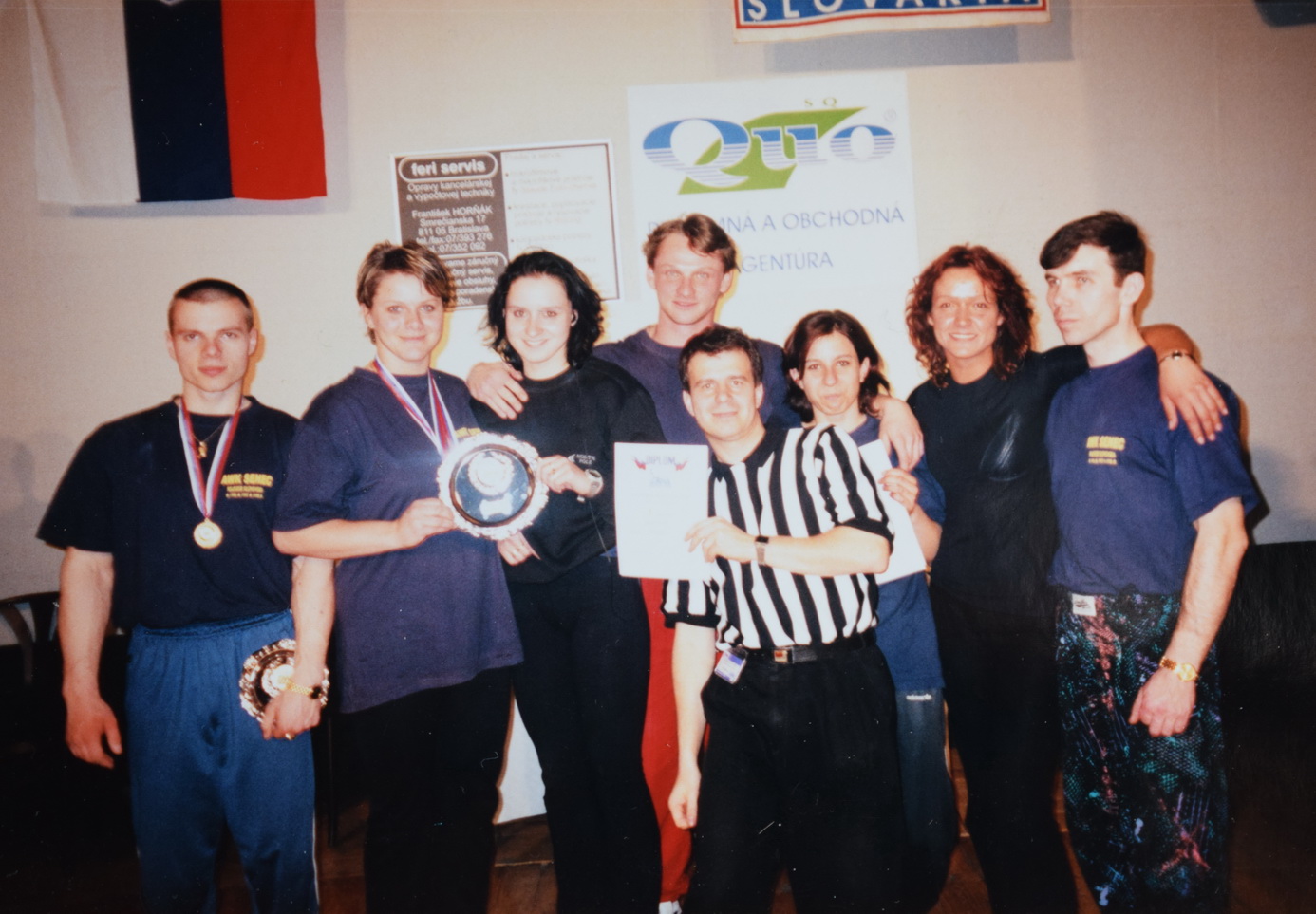
The large number of competitions also brought new faces. The first prospects appeared in the women's category. Among the men, a strong top six stabilized - R. Dobrovič, J. Durec, P. Gazdarica, J. Germánus, P. Jarombek, and J. Petras. For the first time, we also created a national junior team (I will state the reason later) consisting of M. Pastuchová, R. Dobrovič, P. Jarombek, F. Majerčák, and M. Petras. In the women's team, we had two amazons - D. Múčková and M. Pastuchová. As can be seen, almost half of the senior team was of junior age. The decision to focus on this category (Strong Arm, World Junior Championships...) was absolutely correct. A great stroke of bad luck was the injury of J. Durec, who broke his leg and was forced to miss the season. Our medal plans suddenly had a gap. The question was: who would replace Durec?
We devoted great intensity of work to the preparation of the European Championships in Slovakia. We created an organizing team, divided tasks, and started working hard. It was a huge success that the Prime Minister of the Slovak Republic, V. Mečiar, took patronage over the European Championships. After negotiations with sponsors, we chose Poprad as the venue for the championship. A big unknown was the date, because we wanted the sanctioned J. Germánus to be able to participate in the competition. However, the European Championships were traditionally held in the first half of the year. Our diplomacy celebrated success here too. In 1996, the European Championships could take place in September. This was decided by the EAF congress at the European Championships in Italy.
After the failure of our representatives at the World Championships in Brazil, we analyzed extensively why it happened. It wasn't due to poor preparation or failing to handle the atmosphere of the championship. It was mainly about a lack of international experience. In the domestic environment, everyone already knew everyone else. Hands were familiar, technique and tactics were predictable. It was necessary to head out into the world. To grip new hands, soak up new information, and learn new tricks. The increasing level of the Senec Hand helped us a lot in this. A high-quality international competition in the domestic environment is the best thing for a wide range of competitors. For the best ones, we prepared international trips. In addition to the traditional Czech Republic, we participated for the first time in the prestigious ReadyGo! Rochefort competition, which was the best competition in Europe at that time. 155 competitors from 14 countries tested the quality of our representatives. And they did not get lost. In Belgium, we won two first places (R. Dobrovič, P. Gazdarica), one second (D. Múčková), and one third (M. Pastuchová).
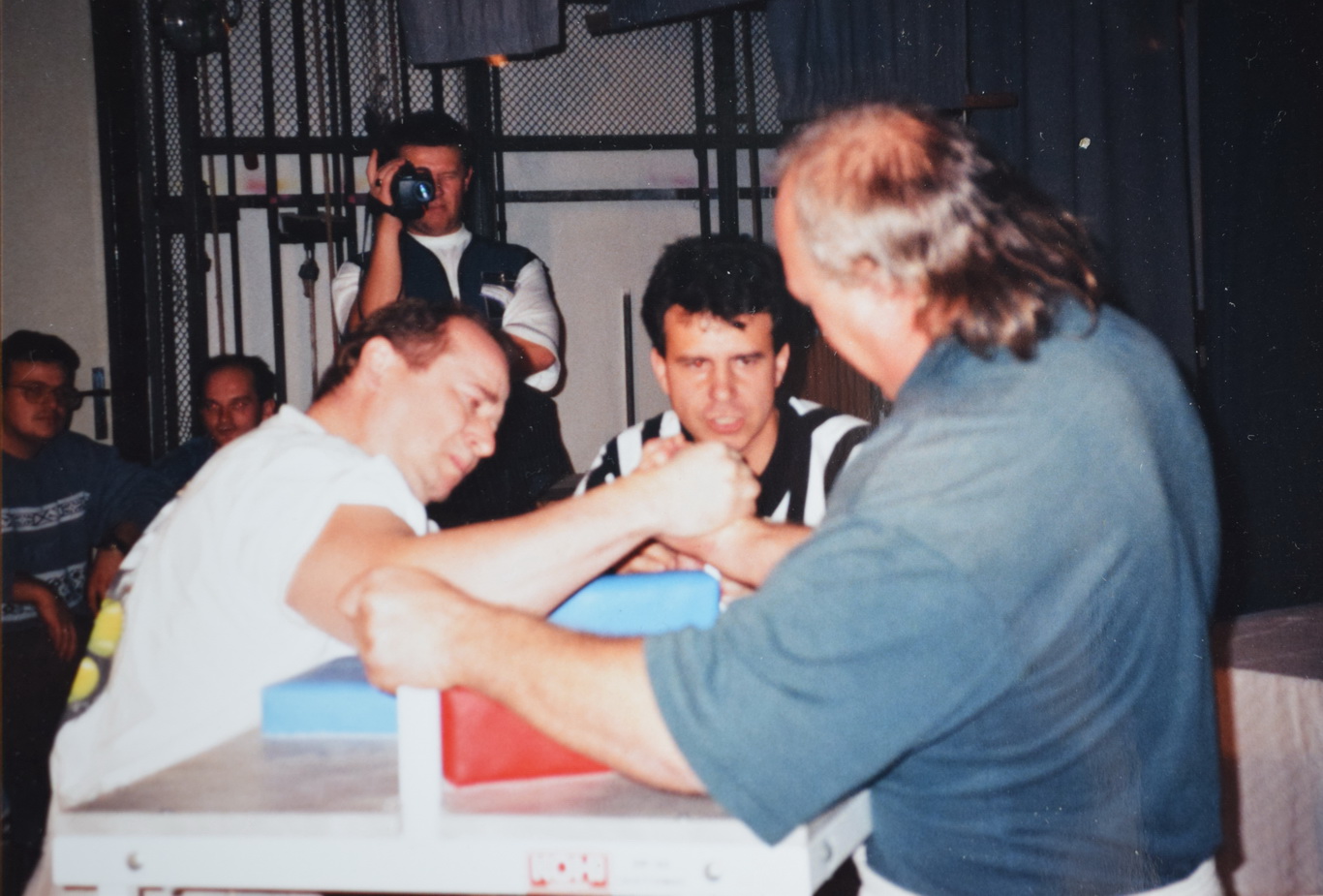
The 1996 European Championships were held in Taglio di Po, Italy. For the first time, Slovakia sent a larger delegation to Italy - D. Múčková, M. Pastuchová, J. Gallik, R. Dobrovič, P. Gazdarica, P. Klúčik, J. Petras, and M. Petras. In the absence of J. Durec, we placed our greatest hopes in P. Gazdarica, who believed (and so did we) in a medal. However, everything turned out differently.
Even before the athletes stepped up to the tables, interesting things happened at other tables during the EAF congress. First, we managed to move the date of the European Championships organized in Slovakia to September (I already wrote about that above). Another success was the approval of Milan Čapla's proposal (EAF Vice-President and SAPR President) to organize the European Junior Championships. A huge success for our diplomacy. The model created in Slovakia was exported to Europe. The path for juniors to medals was open. A very significant step towards the approval of this point was the willingness of the Bulgarians to organize the first junior championship. Negotiations between our president and representatives of the Bulgarian federation before the EAF congress also played a major role in this.
After the congress, the competitions at the tables began. And we closely followed our representatives. Unfortunately, the men did not manage to win a medal. P. Gazdarica was the closest. However, he was eliminated by two fouls (in the medal match), and instead of a medal around his neck, he was left only with tears of sorrow. To our surprise, our women represented us brilliantly in place of the men. After Kondášová's bronze (1994), D. Múčková (silver) and M. Pastuchová (bronze) stood on the winners' podium. Our joy knew no bounds.
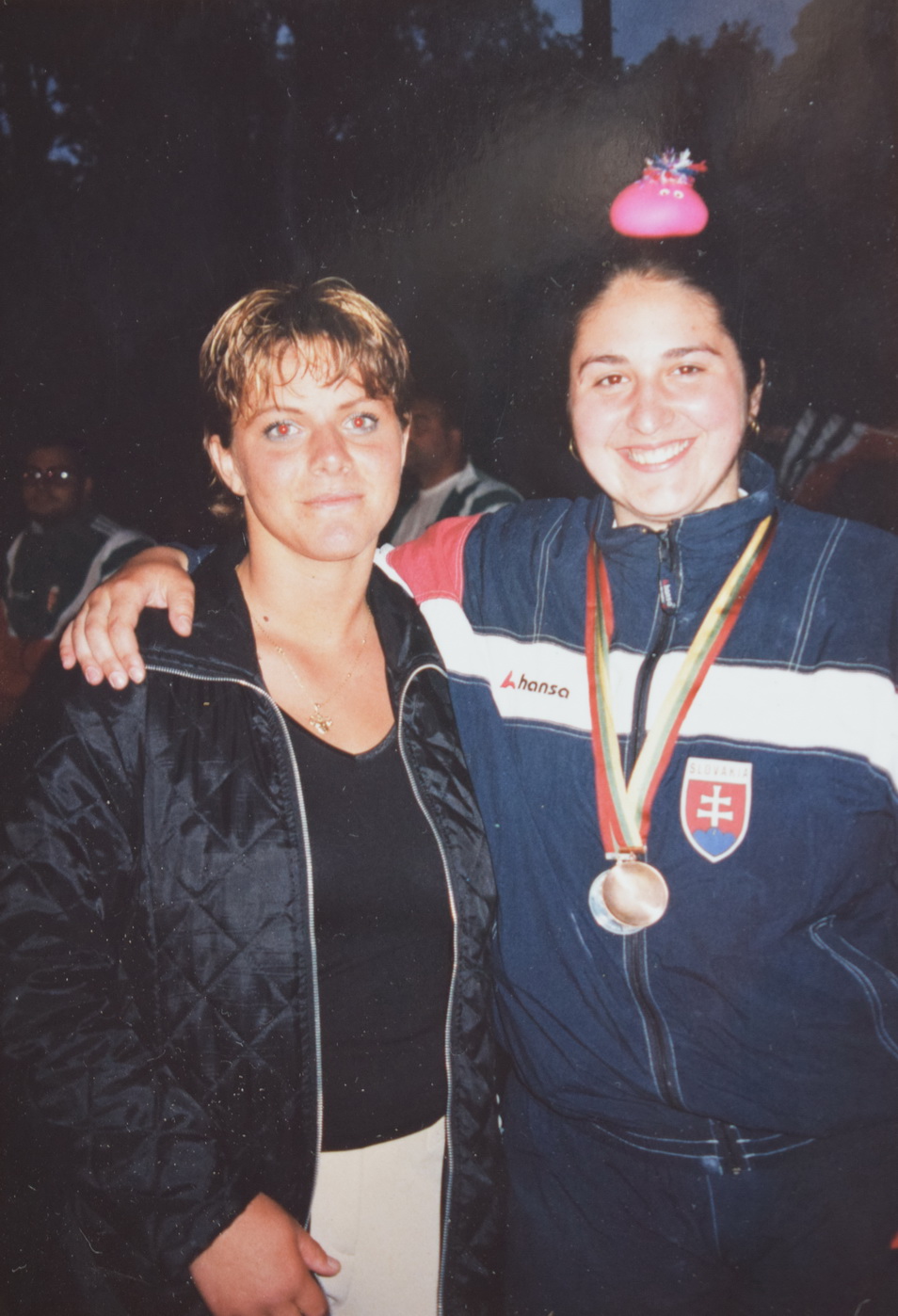
For the first time, we had to travel beyond the borders of our continent for the World Championships. It was the first big trip across the sea. D. Múčková, M. Pastuchová, R. Dobrovič, P. Gazdarica, and J. Petras traveled to Virginia Beach (USA). Even the journey to Virginia was interesting. We moved from Washington by car, and it poured and poured the whole way. Only the next day from the TV did we learn that we were passing through Hurricane Lili. The rest of the stay was trouble-free. At the EAF congress, we presented our readiness for the European Championships in Poprad. Our presentation was met with applause, as for the first time in history, we introduced a time schedule for the competition days. Once again, we were the first in the world in something! Furthermore, the EAF congress confirmed the December date for the first European Junior Championships in Bulgaria. We achieved another success at the WAF congress. The SAPR President was elected as the Chairman of the WAF Technical Commission.
At the tables, our representatives performed with mixed success. The only medal for Slovakia was won by D. Múčková (bronze).
At the first European Junior Championships, on the contrary, we did great. Gold medals were won by M. Pastuchová (2x), R. Dobrovič, silver by D. Múčková (2x), and bronze by M. Petras. A fantastic entry for Slovakia onto the junior scene.