24.05.2020
On the domestic scene, we recorded an influx of new faces. Successful juniors M. Ďalák and M. Mišík began to appear in top positions, as well as new faces like P. Augustín and R. Tomaga. Among the women, junior I. Hatalová also significantly asserted herself. The backbone of the national team was reinforced by its stable members R. Dobrovič, J. Germánus, P. Gazdarica, P. Jarombek, M. Koczka, and M. Pastuchová.
The Slovak Cup again had 4 rounds, which we successfully organized in Ivanka pri Dunaji, Devínska Nová Ves, Banská Štiavnica, and Trenčín. The Slovak National Championships for seniors and juniors were hosted by Bernolákovo for the first time, and for the first time, both championships were held on the same day.
In addition to the "top" league of events, we participated in organizing regional competitions such as Brezovská ruka (Brezová pod Bradlom), Železná ruka (BA), and Silvestrovská ruka (BA).
We continued the successful project of regional championships and added the KŠÚ Junior Grand Prix (Ivanka pri Dunaji).
The "Strong Arm of High Schoolers" again saw success. For the first time, the final was held in the Mladosť sports hall (previously in PKO, BA) with the participation of 168 high school students from 42 schools in the Bratislava region.
The year 1999 was also successful for us in terms of organizing international events. Alongside the Senec Hand, we organized the 2nd Junior World Championships. After the successful start of the Junior World Championships in Moscow, we did everything possible to ensure that non-European countries were also represented at our championship. To our delight, the national team of Brazil confirmed its participation, making the Senec championship truly global. The JWC was attended by 9 countries and ended with a victory for the Russian team. The Russians won in all boys' and girls' categories except one, the girls' up to 58 kg right-hand category. To our great joy, this category was dominated by Slovaks I. Hatalová (1st place) and E. Farkašová (2nd place). In addition to them, medals were won in Senec by P. Mišovič and M. Javor in second place, and K. Sherhauferová, E. Kollárová, E. Farkašová, V. Klúčiková, M. Ďalák, and B. Zajvald in third place. In the country rankings, we finished right behind the winning Russians in a fantastic second place. An interesting fact about this JWC is that Rustam Babayev participated, taking 3rd and 4th place; no one at the time suspected he was a future star of world armwrestling.
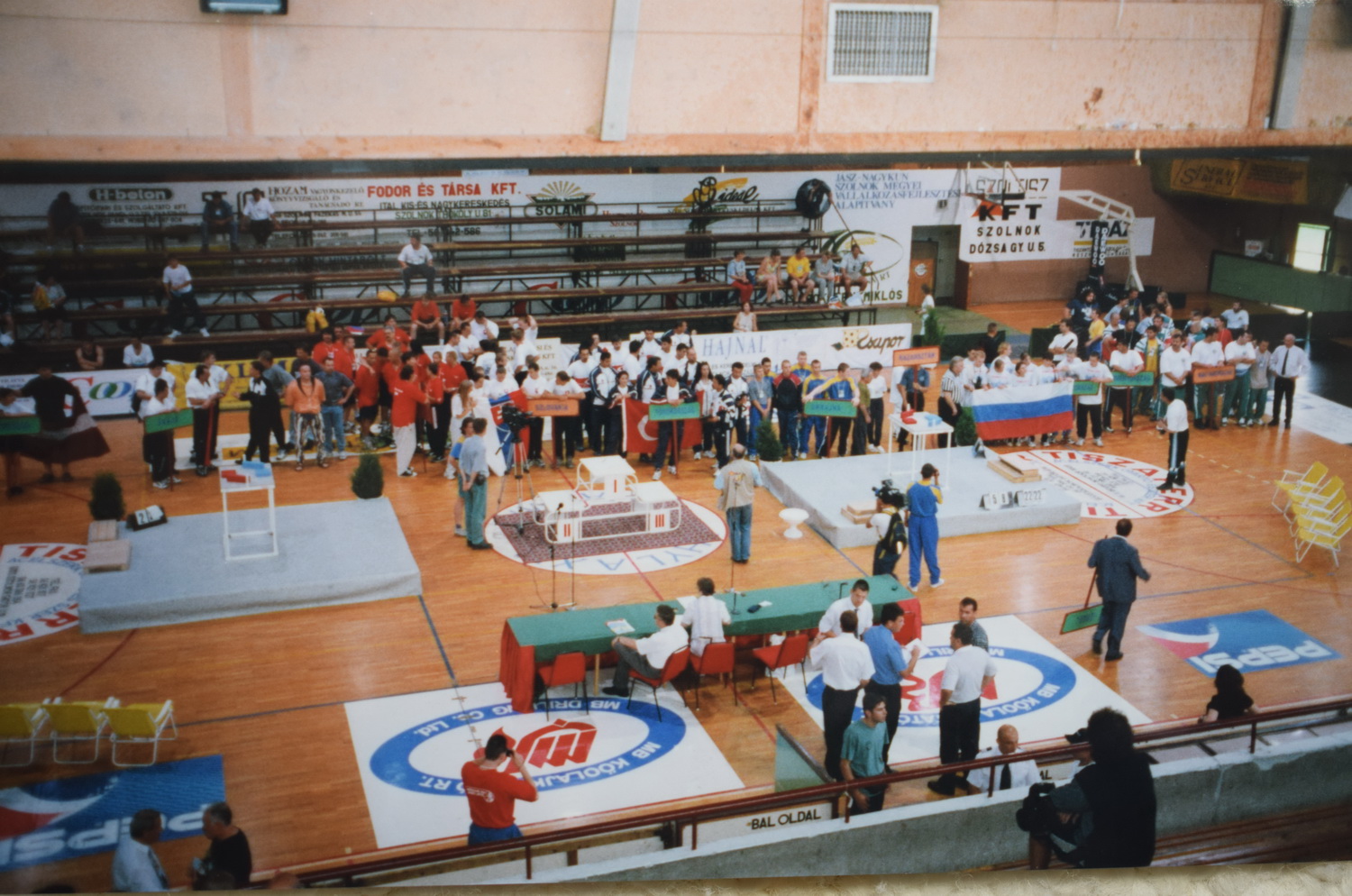
The Junior European Championships were held for the first time together with the senior ones. In Szolnok, Hungary, everything was managed in 4 days, and for the first time, it was a marathon of weighing and competing, all under the management of the Slovak results team.
Strengthened by the success of our juniors at the JWC in Senec, and due to the proximity of the venue for the JEC, we sent a large delegation to Hungary, believing that the Senec medals were no accident. Four gold, six silver, and three bronze medals convinced everyone of the place of Slovak juniors in world armwrestling. Second place, only 7 points behind the winning Russians, was direct evidence of this. Gold medals were won by E. Farkašová, I. Hatalová, P. Mišovič, and M. Javor; silver by K. Sherhauferová (2x), E. Kollárová, P. Mišovič, B. Zajvald, and M. Ďalák; and bronze by E. Kollárová, V. Klúčiková, and M. Javor. A fantastic success, which was the culmination of the work we had dedicated to the junior categories for several years.
As part of their preparation, the seniors participated in several events across Europe and brought back medals from everywhere. Slovaks established themselves in the top ranks and became a "terror" to opponents wherever they went.
For the first time, we participated in an international competition in Barcelona. M. Pastuchová turned her participation there into a victory.
Also for the first time, we visited the popular Golden Arm competition in Sweden. Representing us there were M. Pastuchová (2nd place) and R. Dobrovič (1st place). Rado also participated in the OPEN category, where he fought his way to the final. His opponent was the eventually victorious American B. Brzenk (brother of the famous J. Brzenk).
At the beginning of the year, we also headed to a competition in France. We took advantage of good relations with the Hungarian federation and hitched a ride with their team. The start of the journey was quite wild due to a snow calamity plaguing Central Europe, but we eventually managed everything and, of course, brought back several podium finishes from France. J. Germánus earned first place, while P. Gazdarica fought his way to third. Furthermore, Germánus took second place in the OPEN category, where only the Georgian Chelidze was beyond his strength.
Our athletes performed very well at the Golem Hand (CZE), where someone from Slovakia stood on the winner's podium in almost every category.
The last trip was an international competition in Lithuania, attended by J. Germánus (2x 1st place) and M. Koczka (2nd place). This competition was memorable mainly for the journey, as we took a "shortcut" through Belarus, which cost us countless nerves and time, and we still reminisce about it today.
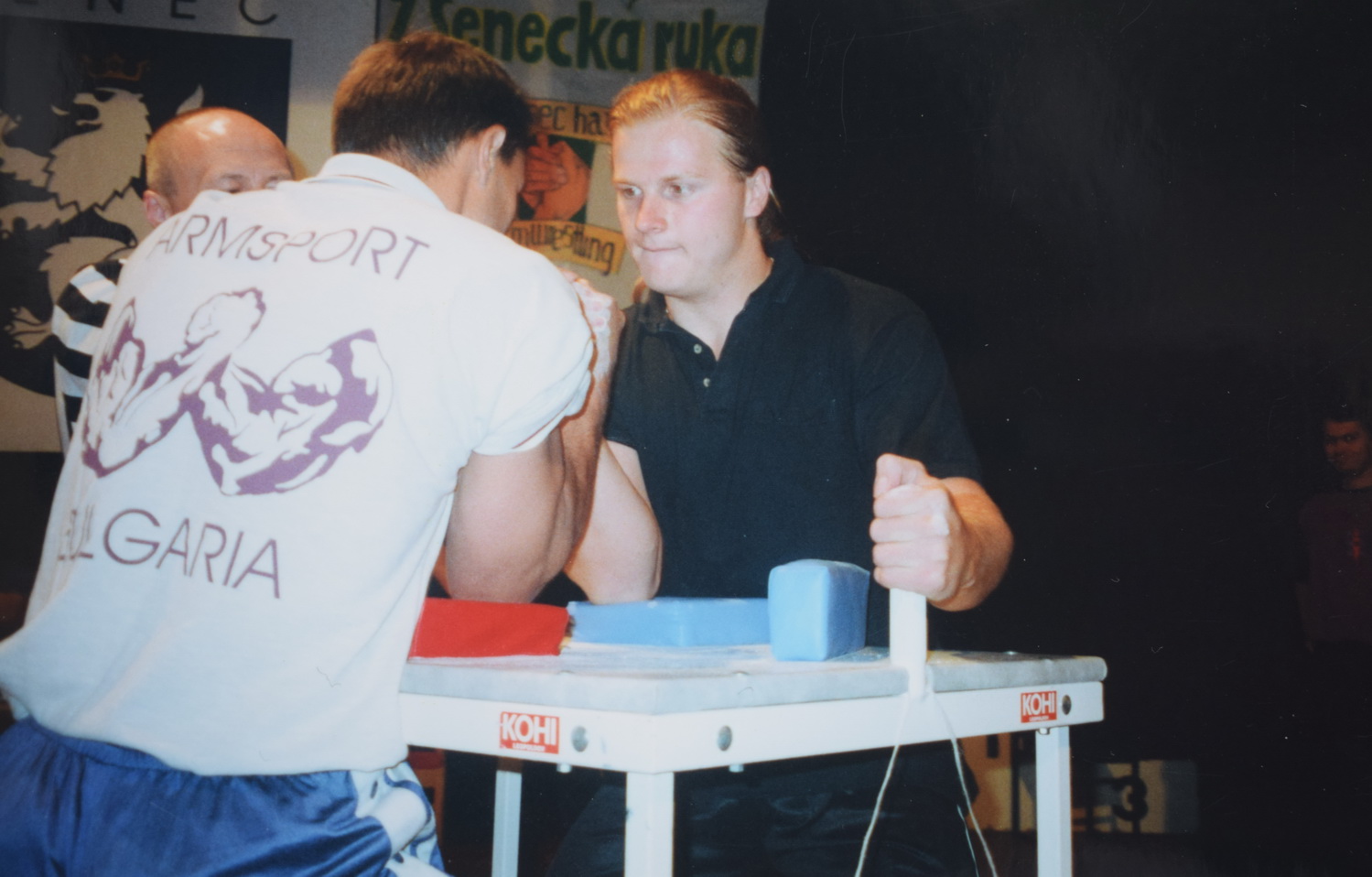
As I mentioned above, the EC was held in Hungary. We sent a larger team to Szolnok, in whom we believed, and they did not disappoint us. Winning three gold, one silver, and three bronze medals is the best testimony to that.
A very significant fact and recognition of our activity on the armwrestling scene was the election of Milan Čapla as Executive President of the EAF. This happened due to the split of the WAF and EAF, when the elected EAF president I. Akhmedshin "defected" to the other wing of the EAF that broke away. The EAF Executive Committee evaluated the situation at its meeting and entrusted the presidency to the Slovak until the next elections.
After success in the diplomatic field, our representatives took it from the ground up. Gold medals were won by M. Pastuchová, P. Gazdarica, and J. Germánus, who also pulled a silver medal. Bronze medals were hung around the necks of M. Koczka, P. Gazdarica, and A. Narančík.
The great performance of our representatives was capped off by the old gentlemen in the masters category, V. Dobrovič (2nd place) and J. Ďalák (3rd place).
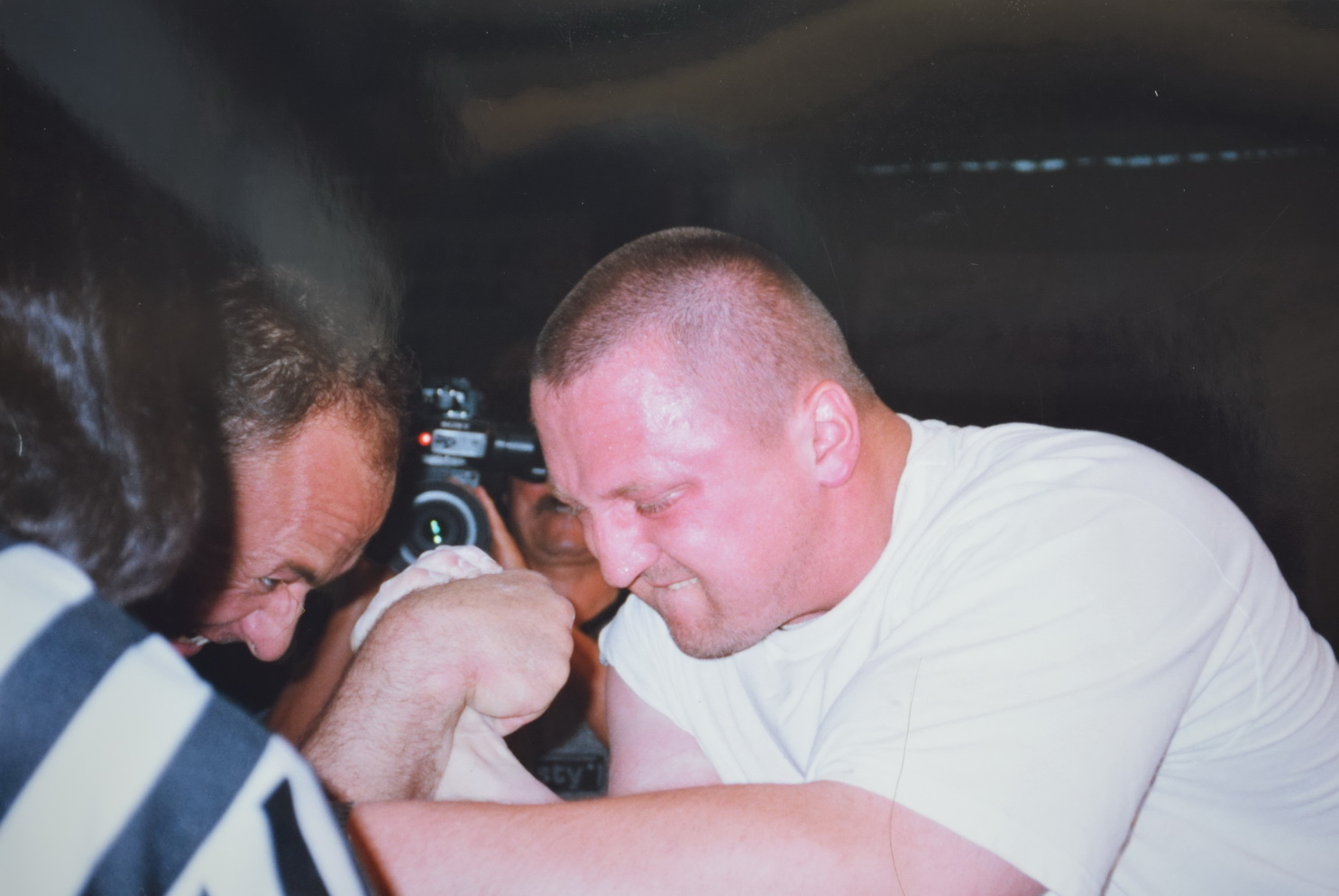
The World Championships for 1999 were awarded to Russia, which chose the capital of North Ossetia, Vladikavkaz, as the venue. A city in the Caucasus region, located just a short distance from Chechnya and Dagestan, where there was unrest in 1999. The political situation in Russia also unsettled WAF General Secretary B.B. Das, who openly advocated for the cancellation of the WC and informed all member countries. Here, the strength of the EAF president and his diplomatic maturity were shown when, in cooperation with the organizers, they secured the event, which eventually took place and became one of the most successful and highest-quality world championships in history. And we were there. It should be mentioned that the WC in Vladikavkaz was managed (to the annoyance of the Americans) by the Slovak results team, and they handled it brilliantly.
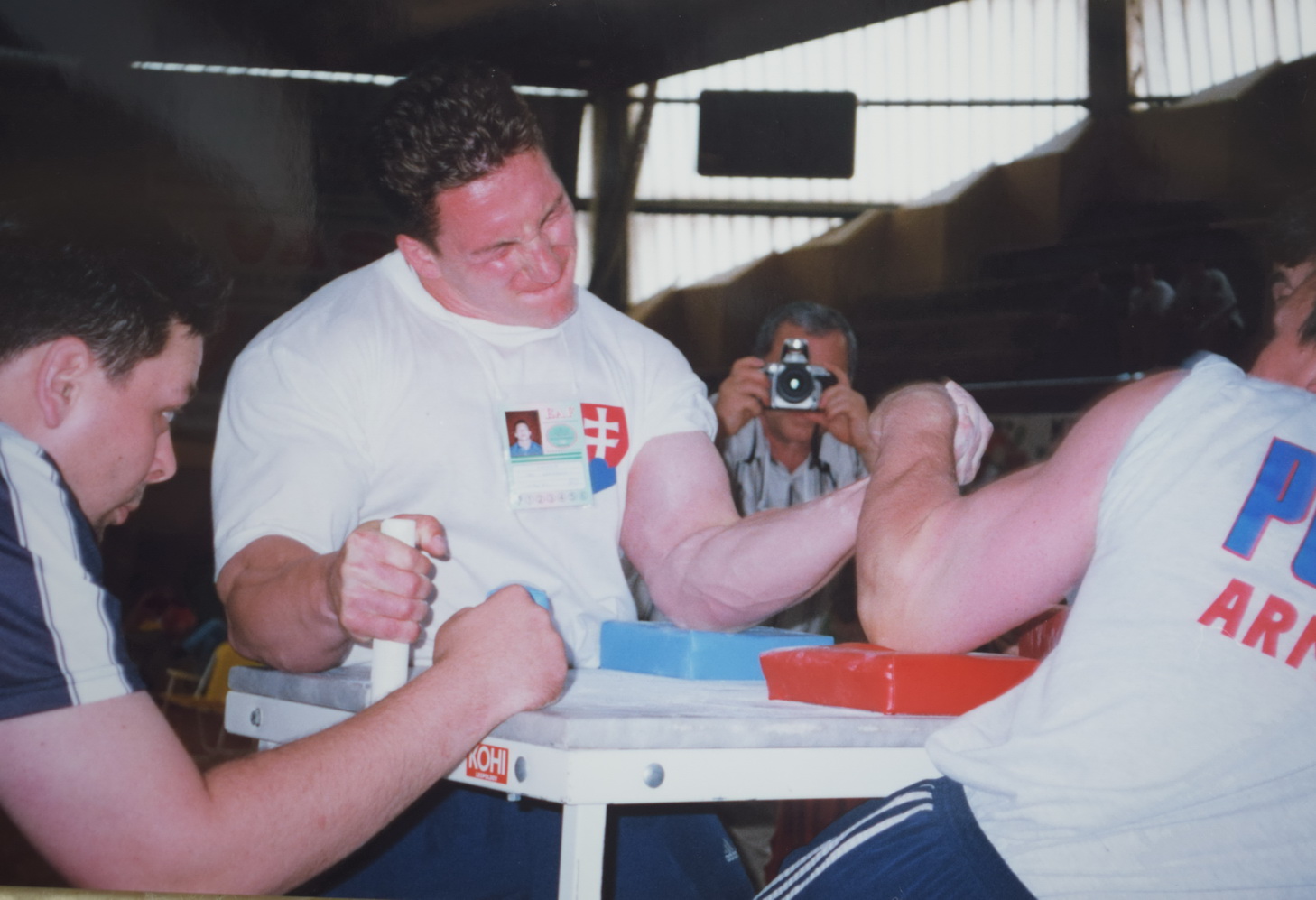
Our athletes also performed brilliantly. In a boisterous atmosphere, they won two gold (J. Germánus) and a silver (P. Gazdarica) medal. Both final matches of our representatives in the right hand were a treat that brought the hall to a boil. After all, their opponents were crowd favorites and local armwrestlers A. Skodtaev in the case of Germánus and R. Chochaev in the case of Gazdarica. And even though their entry into the final was in Gazdarica's favor (undefeated, while Germánus had one loss), the situation reversed after heavy battles; Germánus stood on the highest step, and Gazdarica was left with eyes for crying (though second place was also great!).
The year 1999 thus ended with extraordinary success for Slovak armwrestling at all levels, and we could rightfully enter the new millennium with pride.