25.11.2020
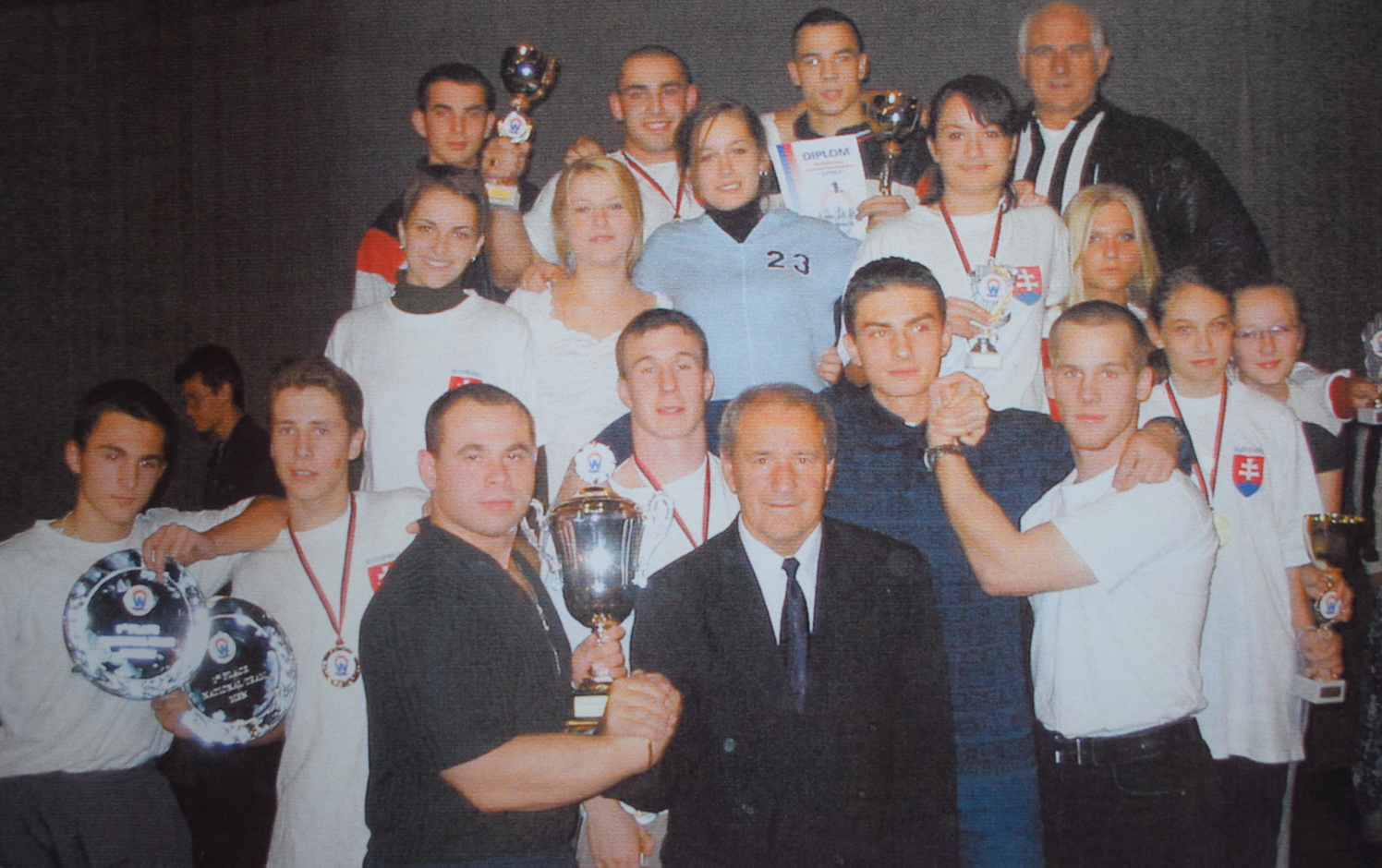
The changes on the international scene were preceded by quality work at home in Slovakia. The "first" SNLP league took the lead. Rounds were held in Vrútky, Banská Štiavnica, and Revúca. Trnava welcomed the Slovak Championships, while Ivanka pri Dunaji traditionally hosted the juniors. In addition, we again organized several regional competitions - Strong Hand of High Schoolers, Sliač Hand, Regional Championships, Iron Hand, New Year's Eve Hand. The abundance of competitions provided a suitable opportunity for new faces, who, however, found it harder from year to year. The Slovak national team was more or less stable, with the performance of the best remaining steady. Getting among the elite was not easy.
Senec Hand was held for the first time in a new spring slot. After the disappointment of the 8th edition, the organizers managed to bring back the glamour and charm of the event. Bumsaité, Ilyushina, Babayev, Smetana - these were the main attractions of the ninth Senec Hand, which became the most successful in history in terms of sports and spectators. Interestingly, the heaviest category, in the absence of regulars like Gazdarica, Szabó (HUN), and Živný (CZE), was won by I. Mazurenko (POL), who brought the Polish national team to Senec for the first time and who became a prominent personality in world armwrestling a few years later.
In 2002, we recorded three international trips - Golem's Hand (CZE), Amber Hand (LTU), and Zloty Tur (POL). At Golem's Hand, our representatives won two first places (M. Ďalák), five second places (I. Hatalová 2x, R. Nyári, P. Racek, R. Tomaga), and one third place (R. Brettschneider). In Lithuania, thanks to R. Dobrovič, we recorded one first place. At Zloty Tur, Germánus did not fare as well as in previous years and won "only" two second places. In the overall category, he was joined by P. Gazdarica with a third place.
The European Championships were held in the Czech Republic. They were preceded by difficult negotiations between both European federations, where the unification of armwrestling on the old continent was being negotiated. In the end, everything succeeded (at least in the sporting part) and the combined championship could take place. Whether the unification took place at the right time and in the right way is a matter of debate. Looking back years later, this situation is viewed from different angles, mainly due to the events of the following years. But at that time, it was a priority and any other interests (on our part) were set aside. At the joint EAF congress, a new executive committee was elected, in which Slovakia also had representation. Marian Čapla was elected to the EAF Executive Committee as "Scoring Director".
Participation in the championship was of exceptionally high quality. The Russian national team was dominant, consisting of two teams, as the Russian Federation mirrored international structures and had representation in both continental organizations.
Our representatives did not get lost. In the junior section, we won 5 silver (M. Ďalák, J. Šimčisko, K. Tóthová, M. Tongeľová, A. Tongeľová) and 4 bronze medals (R. Málek, J. Šimčisko, A. Tongeľová, V. Kľúčiková). Alongside the experienced Ďalák, these were all new names and represented a great promise for our future generation of pullers.
Among the seniors, J. Germánus managed a gold double for the first time on European tables. To his two golds, R. Tomaga added a bronze medal.
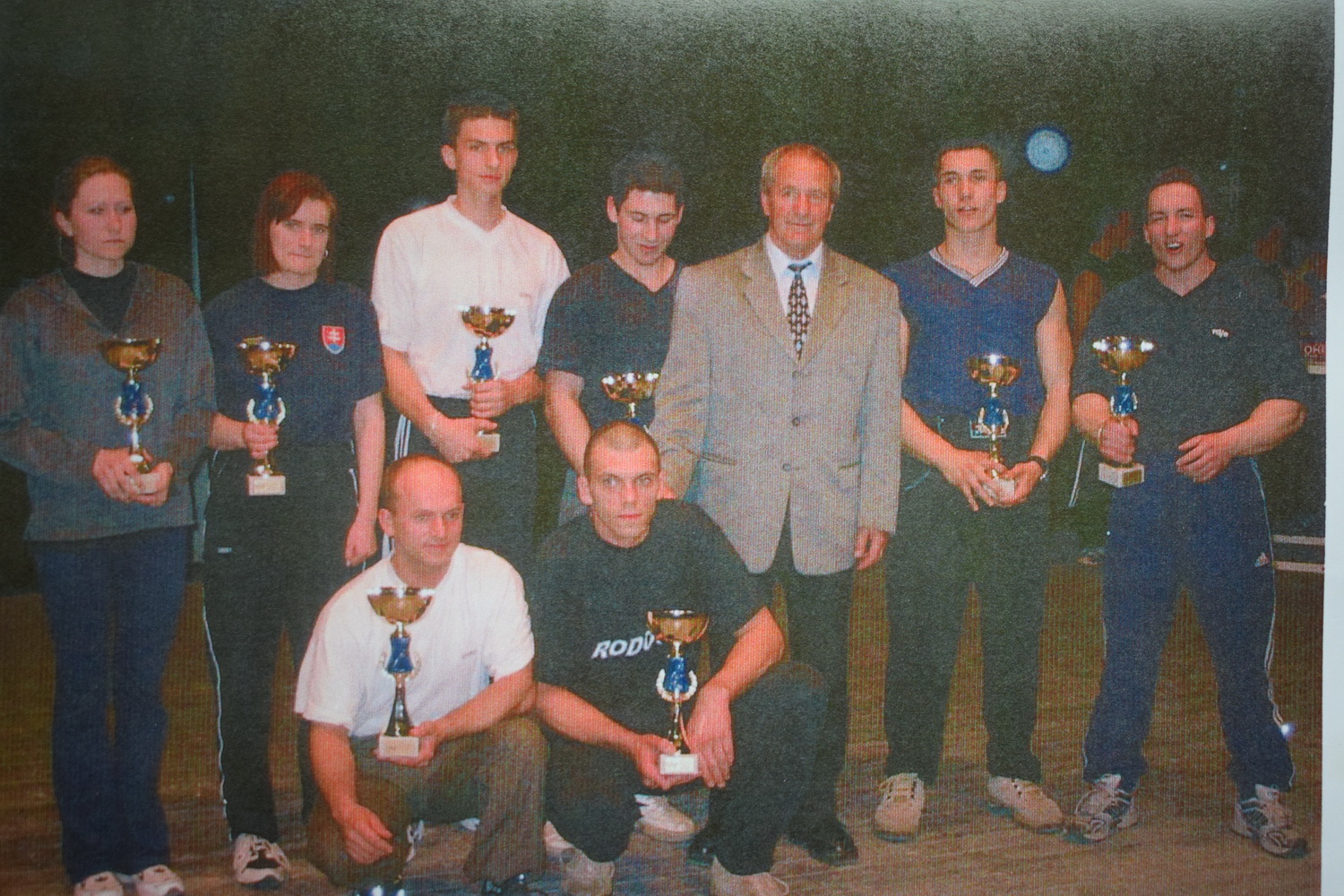
The World Junior Championships were supposed to be held in Ukraine. "Supposed to," because the host country gave up this honor. To save the situation, we offered the possibility of organizing the World Junior Championships in Slovakia. However, some WAF member countries were against this (mainly those that had never sent any athlete to the WJC). Thus, the fate of the championship hung by a thread. After months of waiting, we stopped asking anyone and simply announced the date and competition rules. To the joy of those who regularly brought juniors. We organized the WJC again in Senec. The background and experience from Senec Hand provided the prerequisites that, despite the short time, this event would be organized at a high level. That it succeeded is evidenced by the words of the president of the Brazilian federation and WAF vice-president Umberto Panzetti: "...it would be best if the World Junior Championships were held every year in Slovakia...".
We were all the more satisfied because the Slovak representatives managed to win 5 gold (M. Ďalák 2x, J. Šimčisko 2x, K. Tóthová), 6 silver (V. Kľúčiková 2x, I. Hatalová, K. Tóthová, Ľ. Jagnešák, R. Málek), and 6 bronze (J. Mrva 2x, S. Mihoková 2x, J. Mikovčák, J. Nahálka) medals. And they achieved a truly remarkable feat when they took first place in the country competition!
The biggest discovery and surprise of the championships was the tiny Katka Tóthová, who surprisingly won gold despite entering the final with one loss. As she said after the competition: "...my father said that only world champions can go to the banquet, and I wanted to go so much...".
The senior championship was held again in Egypt, this time in historic Alexandria. For the first time, we arranged accommodation and travel in Egypt on our own, as the prices provided by the organizer were unbearable. In the current era of the internet and various portals where you can arrange everything from the comfort of your home, it seems simple, but in 2002 it wasn't like that. Things were mostly handled by phone and fax. Despite this, everything worked out, and in addition to a successful World Championship, all participants enjoyed the sightseeing part of the national team trip.
At the tables, we followed up on the successes of previous years. J. Germánus again won a gold double and rounded his number of world titles to ten. Peter Gazdarica finally managed to win a gold medal as well. His final match with the Ukrainian Sharkov was among the longest at the championship. A silver medal was surprisingly won by R. Tomaga, and three bronze medals were earned by P. Mišovič, R. Dobrovič, and P. Gazdarica.
At the WAF congress, the merger with the other "half" of the world federation was also discussed. An example was the work in the European federation, which in 2002 already had a joint continental championship. To move the negotiations forward, I was sent as a WAF representative to the world championship of the "other" WAF in Springfield, USA. To make it about more than just diplomacy, I took one athlete with me to make a good name for our WAF. That athlete was none other than J. Germánus. The two first places he won in the USA spoke volumes about the quality of "our" side.
Meanwhile, the unification of the federations was being addressed. I had several constructive conversations with F. Roy and B. O'Leary, where we discussed the possibilities and methods of unifying the armwrestling world. My participation in Springfield laid the foundation stones for the later merger of the world federations.
In 2002, one more important thing happened. After the election of M. Čapla as WAF president, one of his main goals was the recognition of armwrestling as a sport, i.e., the admission of WAF into the global sports federation GAISF. The president devoted great effort to this task and almost succeeded. A wrench was thrown into the works by a letter sent to the GAISF secretariat from the other branch of WAF, which decided that the recognition of armwrestling as a sport was postponed for more than 15 years.